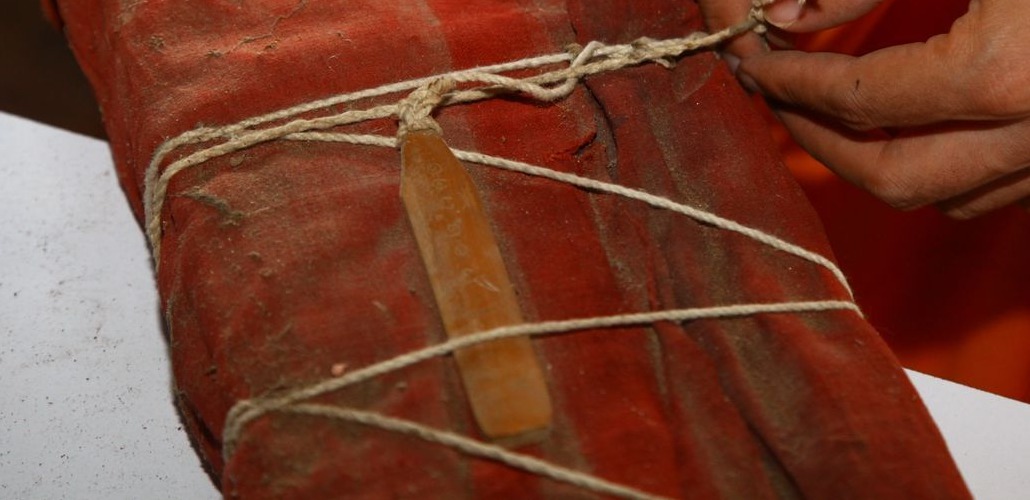
“The largest critical-edition program in the world for one of India's own classical languages is currently coordinated from Thailand because no comparable Indian-led program of equivalent scale exists.”
— Indian-coordination brief
Eighty-one million Telugu readers · The first complete Telugu Tipiṭaka now invites a patron.
English readers have it. Chinese readers have it. Japanese readers have it. The soil of Amarāvatī and Nāgārjunakoṇḍa — one of the ancient Buddhist world's great homelands — does not.
The classical Pāli corpus across the world's reading languages, May 2026.
The Pāli Tipiṭaka — the largest single body of classical Pāli literature, comprising civic-legal codes, philosophical dialogues, and analytical philosophy — was composed and transmitted on Indian soil, and the Telugu country was one of the ancient Buddhist world's great homelands. The stūpa of Amarāvatī gave its name to one of the three foremost schools of early Indian Buddhist art, beside Mathurā and Gandhāra; Nāgārjunakoṇḍa was a major monastic university; and Nāgārjuna, the most influential Buddhist philosopher of the classical age, worked in the South. The Government of India recognised Telugu as a Classical Language in 2008 and conferred the same status on Pāli in 2024. Both are Indian classical heritage of the first rank.
Yet the corpus has been completely translated into Japanese (Nanden Daizōkyō, 65 volumes, 1935–1941, Takakusu Junjirō and team), completely translated into Chinese (漢譯南傳大藏經, 70 volumes, 1990–1998, Yuanheng Temple, Kaohsiung), and extensively translated into English (Pali Text Society, since 1881; Wisdom Publications, ongoing). German, French, Sinhala, Thai, Burmese and Mon all have their own complete or near-complete renderings.
Across India's major living languages, only one has produced a complete translation of the corpus: Hindi (Nava Nālandā Mahāvihāra; B. Anand Kausalyāyan and successors, mid-20th century onwards). Every other major Indian regional language — including Telugu, the fourth most-spoken language in India and the tongue of a former Buddhist heartland — does not have one. Telugu possesses only scattered selections; a state-funded Telugu translation of the Tipiṭaka was announced by the Telangana government in 2024, but no volume has yet appeared. The complete Pāli Tipiṭaka has never been produced in Telugu.
Verified status across India's major living languages, May 2026.
| Major Indian language | Speakers (m) | Complete Tipiṭaka translation | Notes |
|---|---|---|---|
| Hindi | 520 | Complete | Nava Nālandā Mahāvihāra; mid-20th century onwards |
| Marathi | 83 | None | Dhammapada (1923) and selected Suttas only |
| Bengali | 97 | Popular only | Bangla complete translation, Bangladesh 2017 — devotional, not a critical edition |
| Tamil | 75 | None | Selected texts only |
| Telugu | 81 | None | Scattered selections; 2024 state announcement, no volume yet |
| Kannada | 44 | In progress | Mahabodhi Research Centre, Bengaluru — initiated to close the regional-language gap |
| Malayalam | 35 | None | Selected texts only |
| Odia | 38 | None | Selected texts only |
| Assamese | 15 | None | Selected texts only |
The comparison is drawn only against India's major living languages — the languages in which everyday literature is actually read and produced. The gap that matters is the absence of a Telugu edition for Telugu readers.
Why no future edition is expected to surpass it.
The Telugu translation will be produced against the Dhammachai Tipiṭaka — a 17-year international critical-edition program by the Dhammachai Tipiṭaka Project (DTP), Wat Phra Dhammakaya, Thailand. The edition is currently in its publication phase: six of forty-five canonical volumes have been issued (volumes 9–14 in publication order), with the project now targeting a four-volume-per-year cadence. At that pace the remaining thirty-nine volumes complete in roughly ten years — and in no case later than the project's stated fifteen-year ceiling. The Telugu translation programme tracks the Dhammachai source volume-by-volume in parallel — beginning with the six already-published volumes and pacing the source as new volumes appear. On completion of the full source edition, the Dhammachai Tipiṭaka will be the first comprehensive cross-tradition critical edition of the Pāli Tipiṭaka in the history of the corpus.
Earlier published editions, however foundational, are each rooted in a single regional manuscript family. The Pali Text Society edition (Oxford, 1881–) was compiled from European-archive Sinhalese and Burmese manuscripts. The Sixth Council edition (Yangon, 1954–1956) drew almost exclusively on Burmese-tradition manuscripts. The Buddha Jayanti edition (Colombo, 1956–1989) is the Sinhalese tradition. The Thai Royal edition is the Thai tradition. None of them systematically integrates manuscripts from all five surviving classical Pāli script traditions: Burmese, Sinhalese, Thai (Tham), Cambodian (Khom), and Mon.
The Dhammachai edition does. Across seventeen years of fieldwork it has compiled and digitised more than ten thousand classical Pāli manuscripts — approximately 3.7 million individual palm-leaf images across all five traditions, applies a uniform editorial method (“Middle Way Eclecticism”), and publishes the result as a Romanised critical edition with full apparatus — the global academic-standard format, citable in any university classroom or research paper worldwide.
“Middle Way Eclecticism” — rather than privileging any one regional manuscript family, the editorial team systematically compares readings across all five script traditions and selects the most defensible reading on philological evidence, with a full footnote apparatus documenting every variant. Every editorial decision is auditable.
A Romanised critical print edition — the global academic-standard format that allows the edition to be cited in any university classroom or research paper worldwide — alongside a free open-access digital database of palm-leaf manuscript images and transcriptions, accessible to any researcher at no cost.
The Dhammachai edition's standing is not asserted; it is documented by the choices of the institutions whose textual judgment carries most weight in the Western and Eastern academies. In 2009, both Oxford University and Peking University signed translation-partnership Memoranda of Understanding with the Dhammachai Tipiṭaka Project, committing their Pāli faculties to producing English and Chinese translations against the Dhammachai source.
Oxford and Peking did not select the Pali Text Society edition. They did not select the Sixth Council edition. They did not select the Buddha Jayanti or the Thai Royal edition. They selected Dhammachai. If it were not the most defensible classical-Pāli source available anywhere in the world, neither the Boden Professor's department at Oxford nor the Pāli faculty at Peking would have committed faculty years against it.
The Peking partner edition reached best-seller status in Taiwan and earned recognition in mainland China's classical-literature category. The Oxford English track carries the same structural standing in the Western academy. The Telugu partner edition proposed here joins them as the third in this peer group — the first Indian-language partner edition.
Critical-edition programs of this scope are produced once per civilisation. The BORI Mahābhārata edition took forty-seven years (1919–1966) and has not been superseded in the sixty years since. The Dhammachai project has compiled the largest single archive of classical Pāli manuscripts ever assembled — many of which are deteriorating beyond recovery and would not be available to any future program. No comparable manuscript-collation operation is funded anywhere else in the world. When Oxford and Peking each independently selected the Dhammachai edition as the source for their English and Chinese translations, they implicitly endorsed it as the most defensible classical-Pāli source in existence. The Telugu translation produced against the Dhammachai source text inherits this permanence: it becomes the standard Telugu critical text of the corpus for the working life of Telugu as a literary language.
A policy window, a source-text window, and an institutional window — open simultaneously, briefly.
Telugu has been a Classical Language of India since 2008; Pāli was added to that list in 2024. Both now carry the same legal standing as Indian classical heritage of the first rank. The Government's classical-language policy names “preservation, documentation, digitisation, translation, and publishing” as its operational intent — and a Telugu-language critical translation of the Pāli corpus is a textbook implementation of it: one Indian classical language rendered into another, in a land that was itself one of Buddhism's great homelands.
In October 2024 the Telangana government publicly announced funding — part of a ₹4 crore cultural allocation — to translate the Tipiṭaka into Telugu. More than a year and a half later, not a single volume has appeared: no timeline, no published text, no public progress.
This is the ordinary fate of a translation funded as an announcement — a budget line is released, and the work is merely hoped for. This programme inverts it. Contributors are paid only for paragraphs already translated, peer-reviewed, and published online — and the patron reads the actual Telugu text as it appears, day by day. The appetite for a Telugu Tipiṭaka is already on the public record; what has been missing is a delivery engine that turns funding into readable scripture. That is precisely what this is.
The Dhammachai source edition is in active publication, now targeting four volumes per year against a 39-volume remaining run; the full 45-volume source edition is expected to complete within roughly ten years — and no more than fifteen — from 2026. The Indian-language partner-edition track is open and unclaimed: Oxford holds the English partner edition, Peking holds the Chinese, but no Indian-language partner has yet been signed. The patron whose name is associated with this work establishes the Telugu partner edition before any other Indian-language partner is invited. The Telugu programme thereafter tracks the Dhammachai source volume-by-volume — the official Telugu-language partner edition, in real time, as the source publishes.
India's Pāli scholarship sits in established departments — the Universities of Calcutta, Mumbai and Pune, Banaras Hindu University, Nava Nālandā Mahāvihāra and others — and Telugu-speaking scholars carry their own link to the language, such as C. Upender Rao, the Telangana-born Pāli specialist trained at Banaras Hindu University. The open-contribution model needs no single dense local pipeline: it draws Pāli scholars from across India who can render the canon into Telugu, each working part-time through one online platform. What is missing is not talent but the patron whose commitment puts that distributed talent to work.
The Bhandarkar Oriental Research Institute Mahābhārata Critical Edition — the gold-standard Indian critical-text edition of the modern era — ran from 1919 to 1966 and produced 19 volumes from 1,259 manuscripts, edited by approximately fifty scholars over forty-seven years. It is what Indian classical-text scholarship looks like at the highest international standard.
It was made possible by the patronage of the Maharaja of Aundh, the Government of Bombay Presidency, and the Tata Trusts. Their names are recorded in every published volume in perpetuity. The Telugu Tipiṭaka project asks for a comparable patronage commitment, on a comparable timeframe, for the corpus that BORI did not edit.
An Indian institutional vehicle in the model of the Mahabodhi Research Centre, Bengaluru.
The Telugu translation is not a one-off project. It is the founding programme of the Dhammacakka Research Centre (DRC), the Pāli classical-language translation arm of Dhammacakka Foundation Trust, established in 2026 for the express purpose of producing the complete Telugu-language critical edition of the Pāli Tipiṭaka.
The institutional model already exists in India. The Mahabodhi Research Centre, Bengaluru — an arm of the Mahabodhi Society of Bangalore, founded by Venerable Acharya Buddharakkhita in 1956 — has produced twenty-nine volumes of the Tipiṭaka in Kannada, working toward the complete canon, over four decades. The Centre operates as a recognised academic translation institution under Buddha Vachana Trust (publishing arm, established 1965), with its own editorial governance, university affiliation, and multi-decade publication horizon. DRC is structured on the same template, scaled for the full Telugu-language corpus.
Pāli Tipiṭaka in Kannada — 29 volumes published, working toward the complete canon. Operates under Mahabodhi Society of Bangalore; publishing arm Buddha Vachana Trust (1965). Uses the Vipassana Research Institute Pāli text and Bhikkhu Bodhi's English renderings as references. Funded by 80G donations plus government support from Karnataka, Andhra Pradesh and Telangana — which now also backs expansion into further regional languages.
Pāli Tipiṭaka in Telugu. Operates under Dhammacakka Foundation Trust (Reg. AAFTD1099M, 12A & 80G). Joint programme with Chetana Education Society (CSR-1 Reg. CSR00095049). Source text: the Dhammachai Tipiṭaka, translated volume by volume. Produced through an open, paragraph-by-paragraph contribution platform — India's Pāli scholars translating part-time, paid only on acceptance, ₹15 lakh per completed volume; the edition grows as each volume is funded.
Not salaried teams behind closed doors. An open online pipeline where India's Pāli scholars contribute one paragraph at a time — and the patron watches the corpus fill in, live.
The unit is the paragraph. Each volume of the Dhammachai source is divided into its natural paragraphs, and every paragraph becomes a discrete, claimable task on an online translation platform. A qualified contributor — a Pāli scholar anywhere in India, working part-time at whatever pace suits them — claims a paragraph, translates it into Telugu against the source, and submits it. The next contributor claims the next. No one is hired full-time; no one sits idle on salary; no office is rented; no one has to be supervised in person. The work is no longer bottlenecked on finding two or three people willing to relocate and commit full-time — it is opened to every capable scholar in the country at once.
The budget converts entirely into accepted text — there is no waste. Every submitted paragraph passes a scholarly quality gate (peer review, below) before it counts. Work that clears the gate is paid pro-rata on completion of the volume, by the exact percentage of that volume each contributor produced. Work that is wrong, padded, or below standard is rejected: it does not count as a contribution and is not paid. Every rupee disbursed therefore corresponds to a verified, published paragraph of Telugu Tipiṭaka. Structurally, this cannot become a “paper project” — payment only ever flows against text that already exists and has already been checked, and that text is visible online the moment it is accepted.
① Translation contributors — an open pool of Pāli scholars across India's Pāli departments, each claiming and translating paragraphs part-time, paid by the share of the volume they complete. ② Peer review — two senior scholars in the field, who check every paragraph against the source for fidelity before it is counted and paid; nothing enters the volume without clearing them. ③ One style & consistency editor — a single hand who passes over the whole finished volume so the Telugu reads in one even voice rather than as a patchwork of many contributors. This role is deliberately held to one person per volume, because a single voice is what makes a multi-contributor translation read like one book. Reviewers and editor are themselves engaged on the same contribution basis, against a reserved share of the volume budget.
Clear, fixed packages. You sponsor complete volumes; we deliver them as they are funded and translated — your company's name on every volume you fund.
The source volumes are already published and ready to translate — the work waits on no one else. What sets the pace is simply how fast each volume is funded and staffed. We produce sustainably at about two volumes a year, and that grows as the contributor community grows: every scholar who helps translate a volume is named in it — a permanent place in the first complete Telugu edition of the corpus. There is no monthly retainer and no office overhead. You pay per volume, only as it is delivered and verified online (postpaid). Each volume is complete and published on its own; fund one, a few, or the whole edition.
| Package | Amount | What it funds |
|---|---|---|
| One Volume | ₹ 15 lakh | One complete volume — translated, peer-reviewed and published, with your company's name on it permanently |
| Annual Patron | ₹ 30 lakh / year | Two complete volumes a year — our sustainable production pace |
| The Whole Edition | ₹ 6.75 crore | All 45 volumes — recognised as founding patron of the complete Telugu edition |
This is the feature that ends every “will I actually get anything?” doubt. The patron does not receive a report, and not merely a dashboard of numbers. They open the portal and read the translated Tipiṭaka itself — every paragraph that has been completed and accepted, published in full, in Telugu, the moment it clears review.
A government can announce a translation and point to a budget line; what it cannot show, years later, is the text. Here the text is the report. As each paragraph is translated and passes peer review, it goes live on a public reading portal — openable, searchable, and readable by anyone, the patron included. The patron reads the actual work advancing, line by line, in their own language, from their own desk. The statistics are there too — how many paragraphs are done, in review, or pending — but they sit beneath the thing that matters: the scripture you can open and read.
The patron opens any volume and reads the translated text in full — not a summary, not a percentage, the actual Telugu Tipiṭaka as it is produced. The proof of the work is the work, readable on the day it is accepted.
Money is released only against paragraphs already published and readable on the portal. No advance against unstarted work, no payment for output that never arrives, no gap between “funded” and “readable online.” If it has been paid for, you can open it and read it.
Illustrative figures — the live portal renders the real counts, and the real translated text, once the programme is funded and underway.
This is not a new promise to engineer. Dhammacakka Foundation Trust already operates a public real-time financial-transparency portal at csr.dhammacakka.in, where contributors track where funds go. The Live Ledger extends that same principle from the money to the text itself — so the patron sees both the spend and the scholarship advancing together, in one place, in real time.
A patronage commitment in the BORI tradition, not a CSR brand placement.
This is not a CSR brand-placement opportunity. This is a patronage commitment in the BORI tradition. What the patron acquires is a permanent, structural, citable position in the front matter of an Indian classical-text edition that will be cited, taught, and reprinted for the working life of Telugu as a literary language. Support is structured by the volume — ₹15 lakh funds one complete volume, translated, peer-reviewed and published with the funder's name on it permanently. A patron may sponsor a single volume, fund two volumes a year at ₹30 lakh, or underwrite the whole 45-volume edition for ₹6.75 crore as founding patron. Payment is postpaid — each volume is paid only once it is delivered and verified on the Live Ledger — with no monthly retainer and no office overhead. The edition advances as fast as it is funded; whichever volumes a patron funds carry that patron's name in perpetuity.
A position in two lineages simultaneously: the Indian classical-patronage line that runs from the Maharaja of Aundh through the Tata Trusts to the present moment, and the Dhammachai partner-edition line — the Telugu translation joining Oxford (English) and Peking (Chinese) as the third partner edition produced against the Dhammachai source.
A document-citable alignment with India's classical-language policy — Telugu a Classical Language of India since 2008, Pāli added in 2024. A translation produced against the source already chosen by Oxford and Peking — the most authoritative critical edition of the Pāli Tipiṭaka ever assembled.
₹15 lakh sponsors one complete volume, with your name on it forever. ₹30 lakh funds two volumes a year; ₹6.75 crore the whole 45-volume edition. The work has not been done in the eighty years since Indian independence. It will be done by whichever patron commits first.
Published rate baselines, the full-time comparison, exclusions, and comparator.
Rate baselines verified against published Indian translation-industry rate guides (2025). The contributor rate of ₹6.5 / Pāli word sits at the top of the general band and below the full professional-TEP band, with a premium justified by the rarity of Pāli→Telugu expertise; peer review and style editing are funded as separate lines rather than bundled into a single TEP rate.
| Budget line | Full-time teams | Open-contribution |
|---|---|---|
| Translation labour | ₹ 12.5 L (3 salaried) | ₹ 6.5 L (per accepted paragraph) |
| Peer review (2 seniors) | folded into editor | ₹ 2.0 L (dedicated) |
| Style / consistency editor | in the editor line | ₹ 1.5 L (1 dedicated) |
| Tools / platform / coordination | ₹ 1.0 L | ₹ 1.0 L |
| Reserve / contingency | ₹ 1.3 L (10%) | ₹ 1.65 L (15%) |
| Working cost per volume | ₹ 14.8 L | ₹ 12.65 L |
| Idle salary / supervision / office | borne by programme | none — pay on delivery |
| Funder visibility | periodic reports | live, paragraph-level |
At verified market rates the open-contribution model lands at ₹12.65 lakh per volume — roughly 15% below the ₹14.8 lakh full-time cost — while removing idle-salary and supervision overhead and adding paragraph-level live transparency. The patron commitment is nonetheless held at the full-time-parity figure of ₹15 lakh, so the difference becomes a protected reserve rather than a saving the patron is asked to forgo. The model is therefore at least as economical as full-time hiring on price alone, and strictly better on risk and visibility.
This budget covers translator labour and immediate research support only. It does not include typesetting, artwork, cover design, printing, binding, distribution, warehousing, or shipment of finished volumes. Those production-side costs are absorbed separately by the Dhammakaya Foundation under the existing Dhammachai Tipiṭaka publication chain.
The BORI Mahābhārata project ran for 47 years (1919–1966) with approximately fifty editors and produced 19 volumes from 1,259 manuscripts. The Telugu-language Tipiṭaka programme projected here is methodologically lighter than BORI — translation against an already-established critical edition rather than collation of raw manuscripts — but corpus-wise larger by a factor of 2.4 (45 vs 19 volumes). At a sustainable two volumes a year, the full 45-volume edition is a multi-decade endeavour — comparable to the Mahabodhi Research Centre's Kannada programme (~30 vols / 21 years) — but each volume is complete and published on its own, funded the moment a sponsor commits to it, rather than waiting on a single resident team.
All initial enquiries are received by Chetana Education Society as the Implementing Agency holding CSR-1 registration.
This page presents an open patronage proposition for discussion purposes. Final acknowledgement architecture, naming rights, milestone schedule, and disbursement terms are negotiated bilaterally and recorded in a Memorandum of Understanding between the patron, Chetana Education Society, and Dhammacakka Foundation Trust.